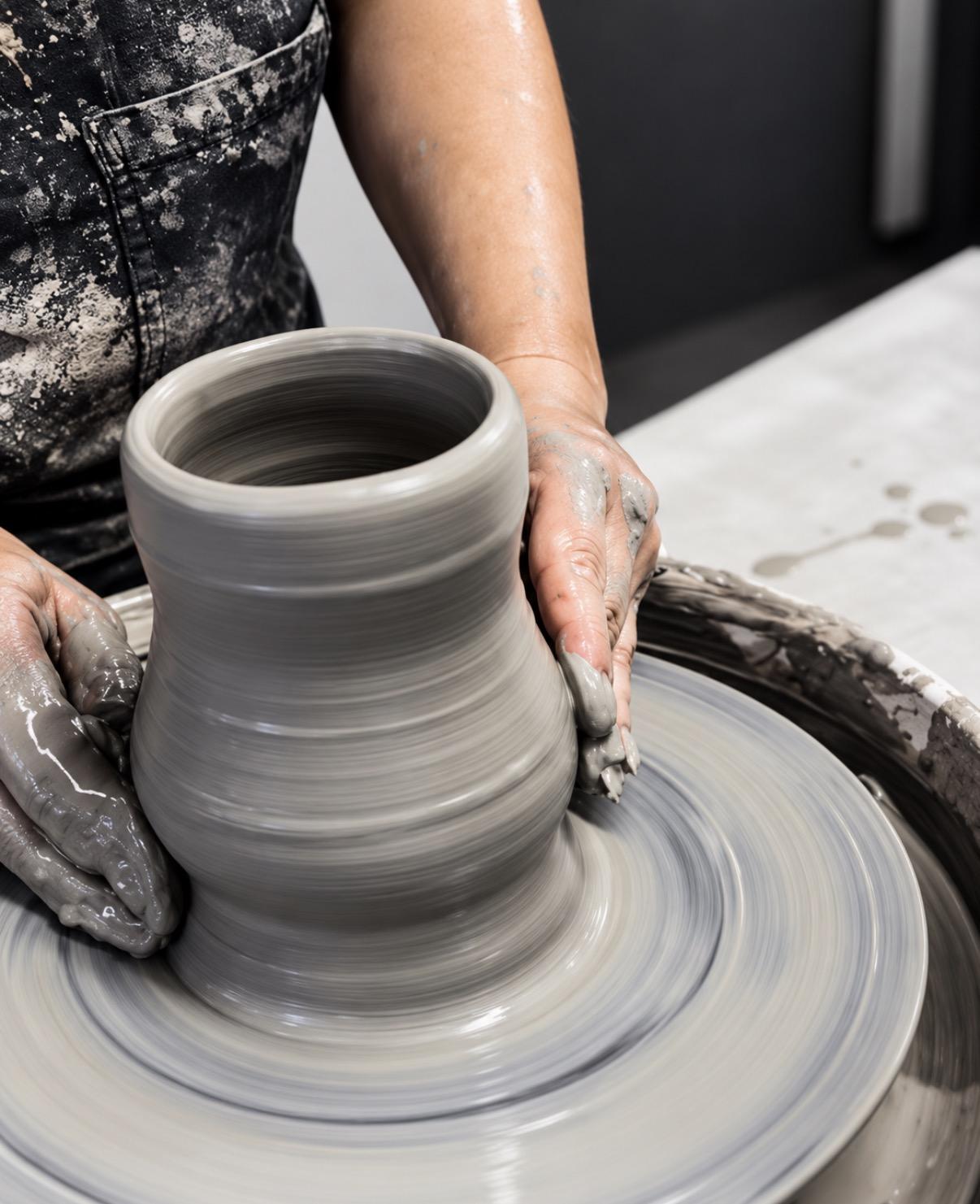
Making a cup on a pottery wheel looks effortless when an experienced potter does it. The clay seems to rise between the hands almost by itself. In practice, that movement depends on centering, pressure, moisture, and timing.
The good news is that beginners do not need instant mastery to enjoy the process. A first class is about understanding what the clay does in response to your hands.
Learn It in the Studio
Make Something Yourself at Color Cocktail Factory
Explore cup creations on the wheel, select your studio or online session, and review current ticket and finishing terms before booking.
Explore Cup Creations on the Wheel →The first challenge is centering
Clay that wobbles on a rotating wheel is difficult to turn into a symmetrical cup. Centering uses steady pressure to bring the mass into alignment with the spinning wheel head.
The sensation can feel unfamiliar at first. The instructor may demonstrate where to brace your arms, how to use the heel of the hand, and why moving your hands gradually is more effective than wrestling the clay.
Opening and pulling are two different skills
After centering, you establish a hollow center and leave enough clay underneath to form the base. Opening too far can create a thin or unstable bottom; opening too little makes the cup cramped.
Pulling means guiding clay upward to form walls. A beginner may make one side thicker than the other, which is normal. Small, controlled movements usually help more than trying to achieve the final height in one dramatic pull.
- Keep your elbows and arms supported where the instructor suggests.
- Use water sparingly so the clay does not become excessively soft.
- Stop and ask for help before a wobble grows into a collapse.
Why the cup's shape matters
A wider, lower cup can be more forgiving than a very tall narrow one. A broad base helps with stability, while a comfortably rounded lip matters for drinking.
Handles are often attached after a thrown cup firms up, which may not fit the timing of every one-session class. A handle-free tumbler is a complete and useful design in its own right.
What a realistic first session looks like
You may center successfully, produce a recognizable cylinder, learn how to rescue a collapsing wall, or simply discover how difficult the material can be. The experience is valuable even when the piece is not kept.
If a piece is selected for finishing, it still needs proper drying, firing, and any appropriate glaze work before functional use. Ask about finishing fees and pickup timing.
Choose a class focused on cups
Color Cocktail Factory lists Cup Creations wheel sessions in its booking catalog. A dedicated cup-focused workshop lets you concentrate on one practical form rather than choosing among too many shapes.
Open the Cup Creations activity page, select Chicago or Eugene, and review the current calendar and included services before reserving.
Frequently Asked Questions
Can I make a cup in one pottery class?
Many beginners can shape a recognizable cup with guidance, but no particular finished result should be guaranteed.
Do I need to bring my own wheel?
No. A studio wheel class provides access to the equipment used during the session.
Can I drink from the cup immediately?
No. Raw clay and unfired greenware are not finished functional ceramics.
Ready to Try It Yourself?
Visit the Cup Creations on the Wheel activity page to select an available session and review what is included in the current class.
Explore Cup Creations on the Wheel →