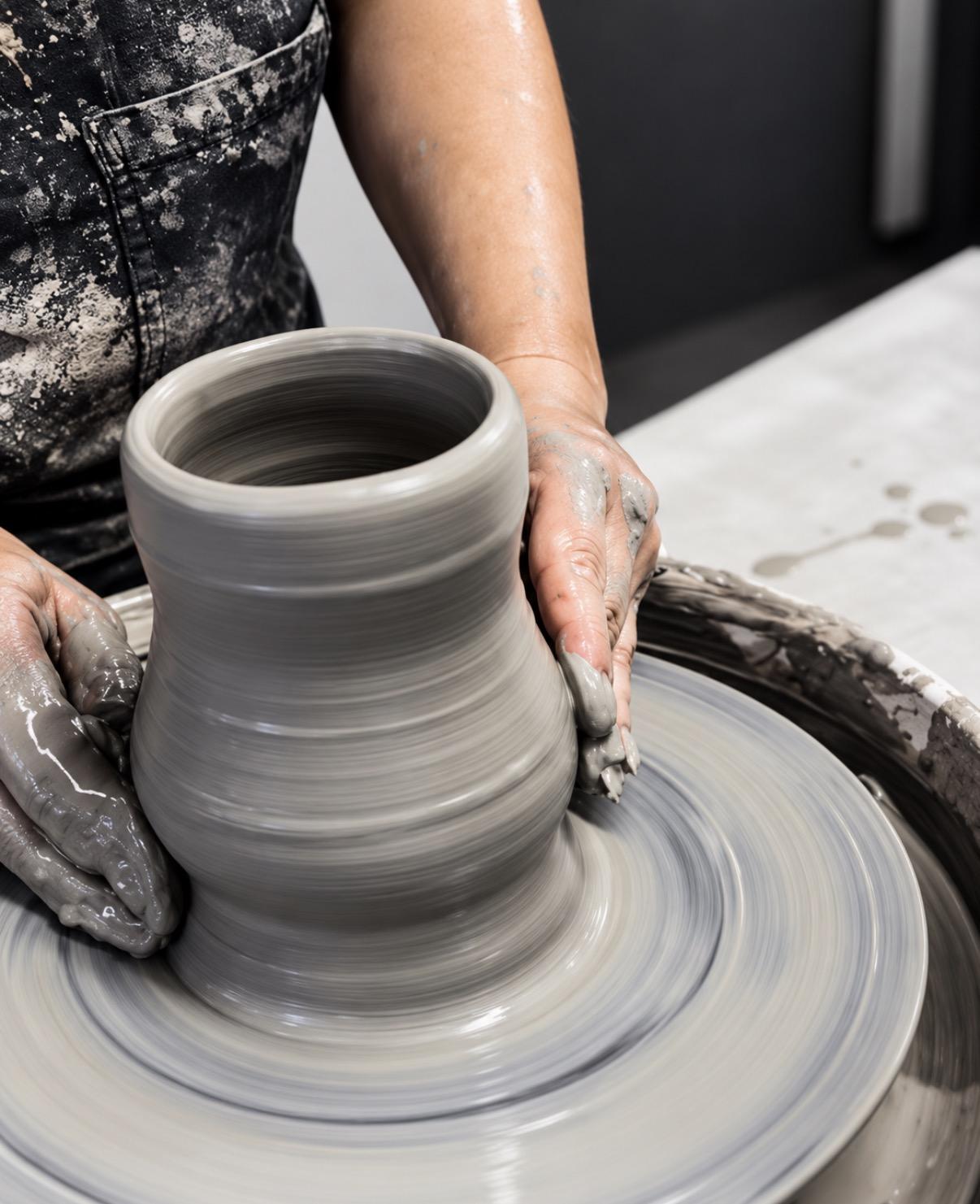
The words cup, mug, and tumbler sometimes overlap, but the shapes suggest different challenges on the wheel. Understanding those differences can help you set a realistic goal for your first class.
If you are choosing between several vessel ideas, start with the form that teaches good fundamentals without requiring an elaborate attachment.
Learn It in the Studio
Make Something Yourself at Color Cocktail Factory
Explore cup creations on the wheel, select your studio or online session, and review current ticket and finishing terms before booking.
Explore Cup Creations on the Wheel →A simple cup: your introduction to a hollow form
A basic cup needs a stable bottom, walls that rise without collapsing, and a rim that feels comfortable. Its proportions can be short and broad, which allows beginners to focus on control.
Think of the first cup as a study in proportion. The relationship between base width, wall height, and lip shape affects both appearance and usability.
A tumbler: simple silhouette, subtle decisions
A tumbler is often a handle-free drinking vessel with a straightforward shape. It seems simple but reveals uneven walls quickly because there is no handle or decoration to distract the eye.
A short, gently tapered tumbler can be a practical first goal. Taller straight-sided versions require more control of clay distribution and may be better after some practice.
A mug: the handle adds another lesson
A mug usually involves a handle, and that detail introduces handbuilding and joining after the thrown body has firmed up. The handle must be secure, well proportioned, and pleasant to hold.
Because handle construction and drying can require separate stages, a beginner class may not include all steps. Never assume a wheel class offers a finished handled mug unless the particular listing specifies it.
- First session: consider a short open cup.
- For a sleek look: try a moderately tapered tumbler.
- If you want a handle: confirm whether attachment is taught.
- For all three: keep the rim smooth and the foot stable.
Design for use, not only photographs
A heavy bottom makes a cup sturdy but may feel awkward. A very thin lip can be fragile. The shape should be comfortable for the intended beverage and the person holding it.
Even after shaping, the piece is not ready for drinks. Ceramic firing, suitable glazing, and final inspection are necessary for functional use.
Where beginners can start
Color Cocktail Factory's cup-focused wheel workshop provides a starting point for learning one of pottery's most recognizable forms. Chicago and Eugene booking options can be checked through the activity page.
Choose your class based on skill learning first; the finished object, when successful and appropriately finished, is an added reward.
Frequently Asked Questions
Is a mug harder than a tumbler?
A handled mug usually involves an additional attachment stage, making it more complex than a simple handle-free form.
Can I start by making a tall cup?
You can try, but a shorter form is often easier for beginners to stabilize.
Is a wheel-thrown cup automatically food-safe?
No. Appropriate firing, finish, and final condition are necessary.
Ready to Try It Yourself?
Visit the Cup Creations on the Wheel activity page to select an available session and review what is included in the current class.
Explore Cup Creations on the Wheel →