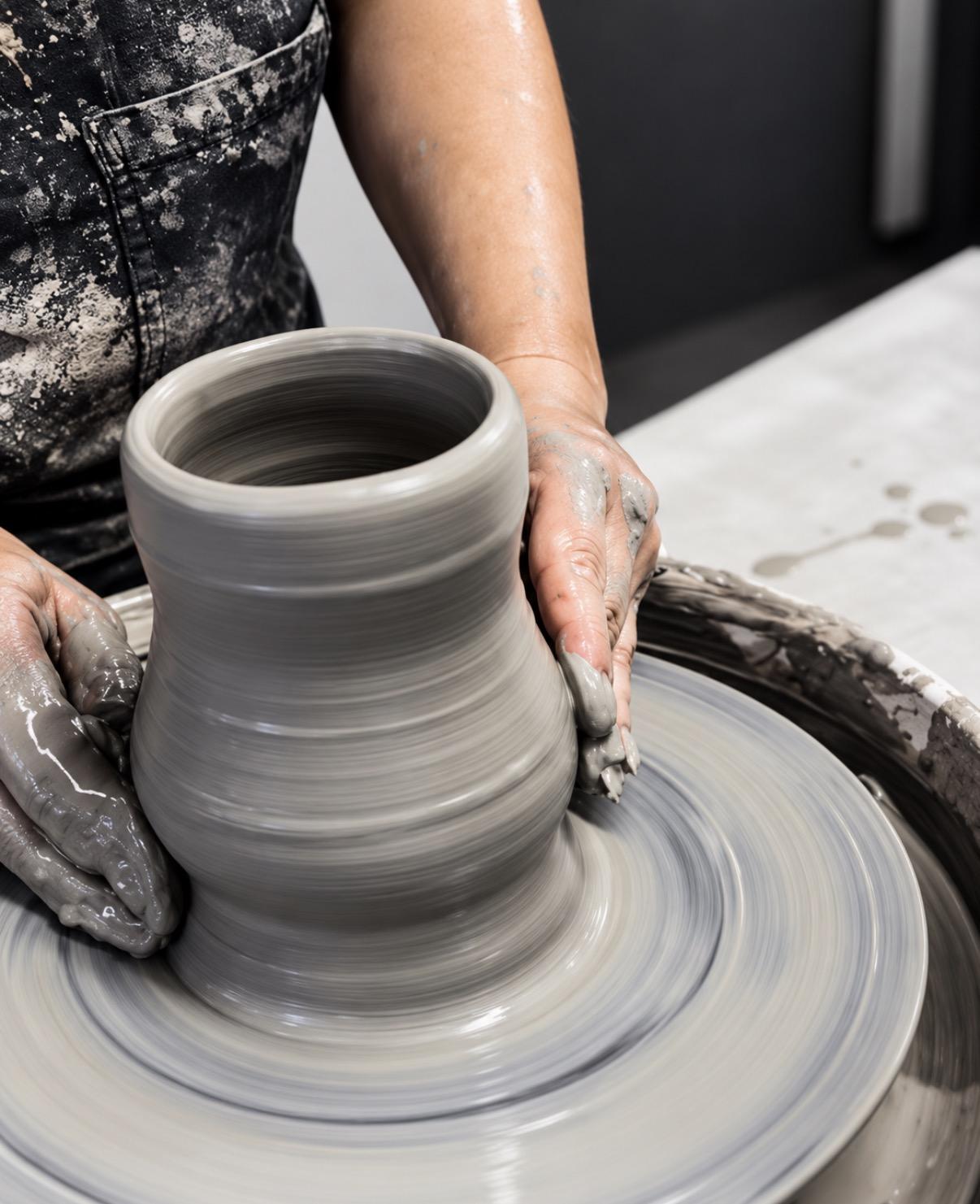
A cup can look finished while still being unsuitable for a drink. Pottery involves different material states: wet clay, dry greenware, bisque-fired ceramic, and a final fired object with or without glaze.
Whether a finished cup is suitable for food and beverages depends on more than one coating. It involves the clay body, glaze formulation, firing maturity, any defects, and intended use.
Learn It in the Studio
Make Something Yourself at Color Cocktail Factory
Explore cup creations on the wheel, select your studio or online session, and review current ticket and finishing terms before booking.
Explore Cup Creations on the Wheel →Why greenware is not drinkware
Freshly shaped or fully dried clay has not been converted into a durable fired ceramic body. It can be fragile, water-sensitive, and unsuitable for holding beverages.
Do not attempt to use an unfired cup for food or liquids. The piece must pass through appropriate kiln processes before anyone evaluates it for functional use.
What bisque firing changes
A bisque firing hardens the dry clay so it can be handled and, often, glazed more safely. Many bisque-fired bodies remain porous, which means they should not simply be treated as finished drinkware.
The exact bisque temperature and subsequent steps depend on the studio's clay and glaze systems. Potters work within compatible firing ranges rather than using a universal setting for every cup.
What glaze firing contributes
An appropriate glaze can create a durable surface when fired correctly on a compatible clay body. However, a visually glossy finish is not automatically proof of food-contact suitability.
Use glazes designated by the manufacturer and studio for functional ware. Assess the fired surface for cracks, roughness, pinholes, or other defects; a finished object that fails inspection should be decorative rather than used for beverages.
- Ask which clay and glaze system the studio uses.
- Check intended food-contact use, not just the color.
- Avoid using visibly cracked or damaged cups for drinks.
- Follow studio guidance about care, thermal shock, and washing.
Why some handmade pieces are decorative
Highly sculptural cups, unusual surface decorations, or experimental finishes may prioritize appearance over utility. That is an entirely valid artistic choice, as long as the intended use is clear.
If a cup is labeled decorative, do not assume a home-applied sealer or extra household bake will make it food-safe. Ceramic material safety involves more than surface appearance.
Ask before choosing finishing services
Color Cocktail Factory offers firing and glazing options for pottery projects. The actual fee and what is included must be verified for your appointment at checkout.
If you book Cup Creations on the Wheel, tell the instructor whether your priority is learning, a decorative memento, or eventual functional drinkware. That helps the studio explain the suitable finishing path.
Frequently Asked Questions
Is bisque pottery food-safe?
Typically not suitable for drinkware by itself, because many bisque-fired clay bodies remain porous.
Does a shiny glaze guarantee food safety?
No. Compatibility, proper firing, glaze composition, and the finished condition all matter.
Can I fix an unsafe cup with a home sealant?
Do not assume a consumer sealant will make unsuitable ceramic ware safe for food or drink.
Ready to Try It Yourself?
Visit the Cup Creations on the Wheel activity page to select an available session and review what is included in the current class.
Explore Cup Creations on the Wheel →