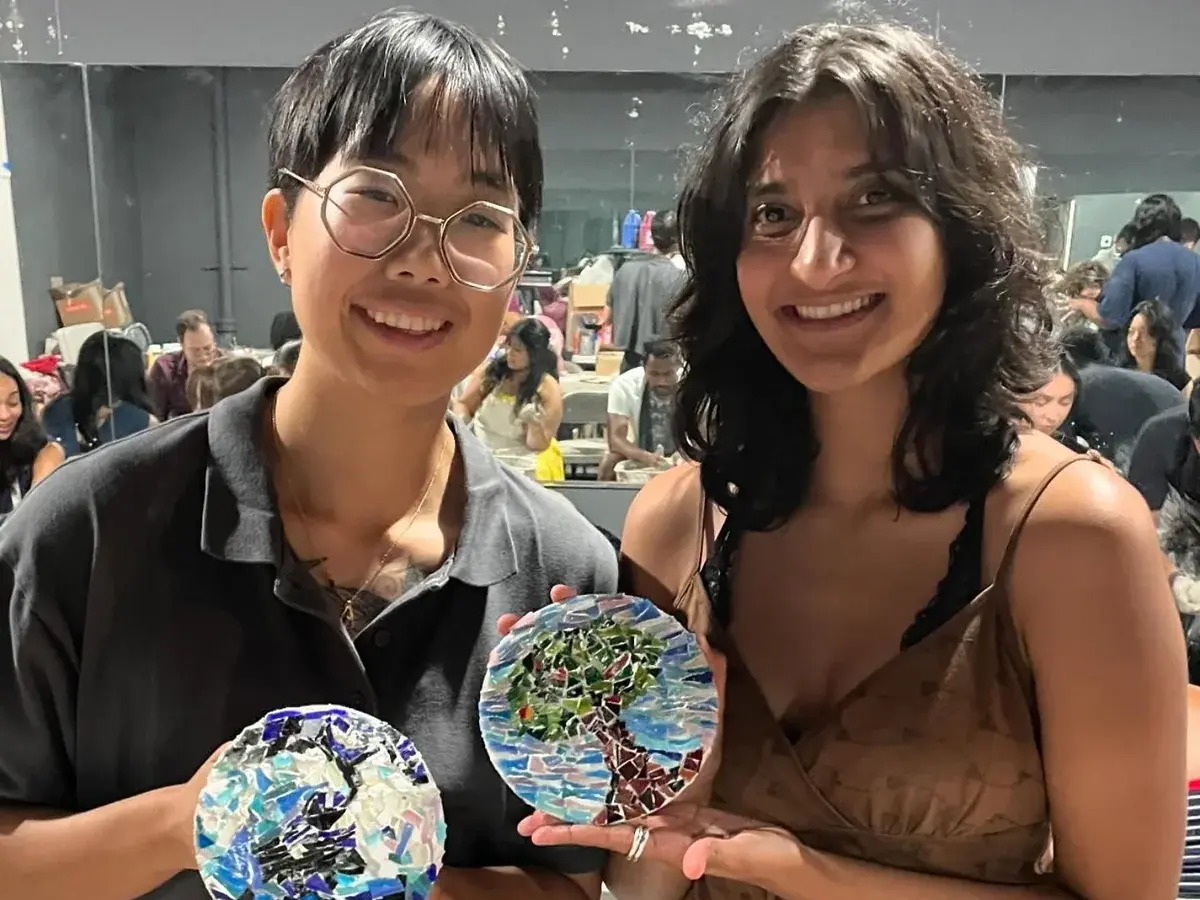
One of the pleasures of mosaic is that you can make a convincing design without being able to draw a portrait. Rhythm, repetition, and carefully chosen colors do much of the work.
These twelve ideas can be adapted to a small decorative plaque or another suitable base. Think of them as starting points, not rigid diagrams.
Learn It in the Studio
Make Something Yourself at Color Cocktail Factory
Explore beginner mosaic class, select your studio or online session, and review current ticket and finishing terms before booking.
Explore Beginner Mosaic Class →Four patterns built from repetition
Try alternating checkerboard squares, nested rectangular borders, a wave made from repeating curved rows, or a line of fan shapes radiating from a corner. Each relies on a repeated unit, so you can concentrate on spacing instead of inventing a new form at every turn.
When repeating a pattern, sort tiles by approximate size before gluing. Inconsistent piece sizes can be expressive, but arranging them deliberately makes the rhythm read more clearly.
- Checkerboard: alternate two high-contrast colors.
- Nested borders: repeat a small rectangle inside a larger one.
- Waves: vary color gradually along curved rows.
- Fans: radiate narrow pieces from a common point.
Four organic patterns
Create a single flower with a contrasting center, a rising sun with triangular rays, a leafy branch crossing the surface, or a fish silhouette made from broad color areas. These designs are recognizable even when the shapes are loose.
Use the background to support the main subject. A strong flower can disappear if every surrounding tile is just as saturated. A quieter border or background makes the focal point stand out.
- Simplify leaves into almond shapes.
- Let a bold sun sit against a restrained sky.
- Outline a silhouette with contrast rather than tiny details.
Four contemporary abstract patterns
Try offset horizontal stripes, concentric circles, a diagonal split into warm and cool colors, or a scattered constellation of bright accents on a dark field. Abstract patterns invite experimentation because a small variation can feel like part of the design.
Limit the number of visual systems in one small work. Combining concentric circles, checkerboard, and a detailed floral image usually divides attention rather than adding sophistication.
Refine the layout before committing
Arrange the pieces dry, photograph the design, and look at it from a distance. If the eye jumps unpredictably, remove a few accents or strengthen the intended focal point.
Once the composition works, begin setting the tiles with materials appropriate to the base. A guided Mosaic Creations workshop in Chicago is a convenient way to learn the physical steps while focusing on your own pattern.
Frequently Asked Questions
What is the easiest mosaic pattern?
Simple stripes, borders, and checkerboard layouts are generally forgiving for first-time makers.
Should the pieces be exactly the same size?
Not necessarily. Consistent spacing and a coherent pattern often matter more than perfect uniformity.
Can I make a mosaic without drawing a sketch?
Yes. Dry-laying pieces directly on the base is an effective way to compose.
Ready to Try It Yourself?
Visit the Beginner Mosaic Class activity page to select an available session and review what is included in the current class.
Explore Beginner Mosaic Class →