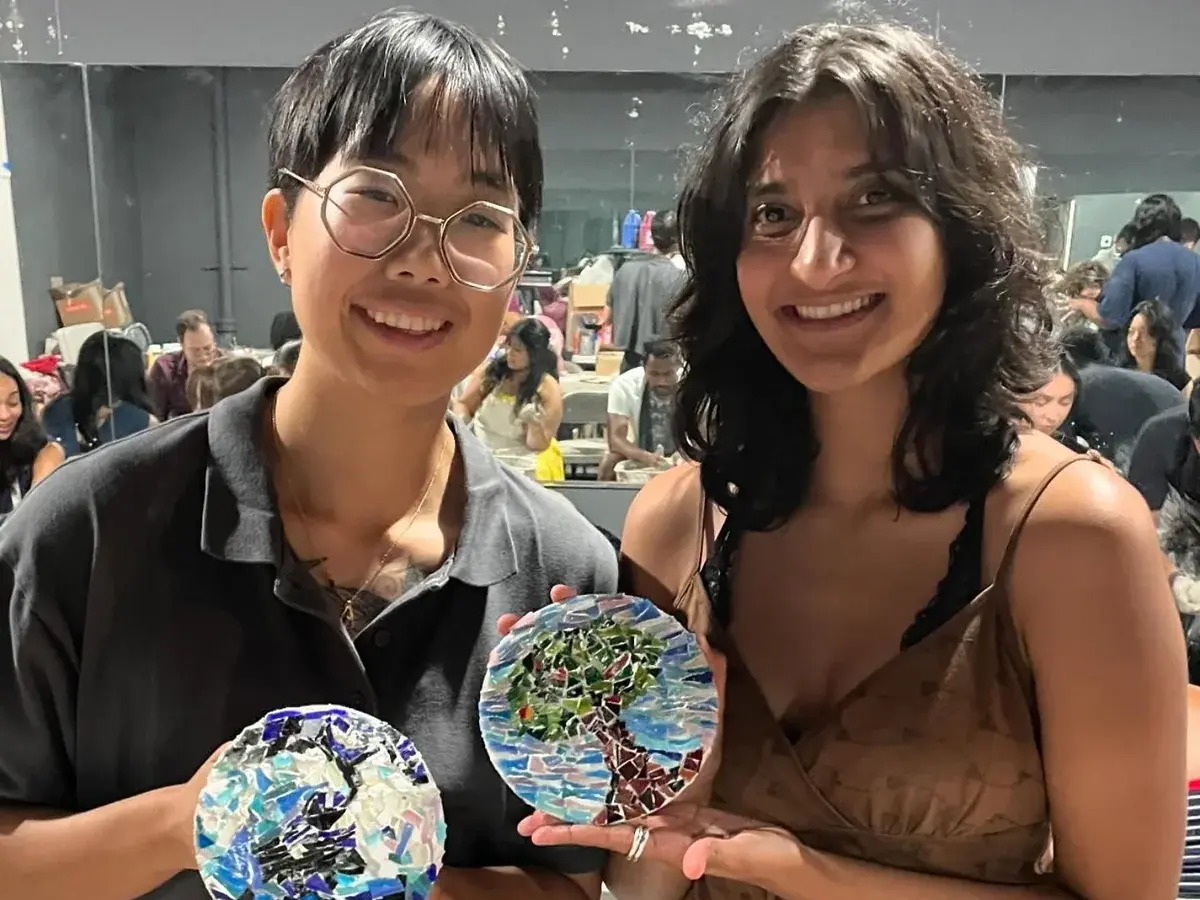
Tile choice changes more than color. It influences weight, reflectivity, texture, the tools you may need, and the mood of the finished artwork.
Glass, ceramic, and stone each have strengths. The best material is the one that suits your project's location, scale, and finishing method.
Learn It in the Studio
Make Something Yourself at Color Cocktail Factory
Explore beginner mosaic class, select your studio or online session, and review current ticket and finishing terms before booking.
Explore Beginner Mosaic Class →Glass: light, reflection, and saturated color
Glass tiles can catch light and create a luminous surface. Translucent and opaque glass behave differently: a transparent fragment may reveal its backing, while opaque pieces emphasize their own color.
Glass edges can be sharp, and compatibility with cutting tools and adhesives matters. Beginners should follow guided safety procedures rather than assuming ordinary craft scissors or household tools are appropriate.
Ceramic: variety and forgiving texture
Ceramic tiles offer a wide range of glazes, surface textures, and colors. Some are already shaped into convenient units, while others can be cut or broken for more irregular compositions.
A matte ceramic next to a glossy tile creates contrast even within a single color family. This can be useful in earthy landscapes, floral designs, and abstract work where subtle changes matter.
- Check whether pieces are suited to indoor or outdoor use.
- Use eye protection and safe cutting methods.
- Select an adhesive compatible with both tile and base.
Stone: natural variation and visual weight
Stone pieces often have mottled colors, irregular edges, and a quiet, tactile quality. They work well for designs inspired by rivers, architecture, gardens, and geological patterns.
Stone can be heavier and may require attention to backing strength. Its natural variation is a feature, not a defect: arrange pieces by tonal family to create a deliberate transition.
Mix materials with intention
A small amount of glass can become an accent among ceramic tiles; stone can anchor a design built from brighter materials. Mixing is most effective when one material dominates and the others provide contrast.
Before using mixed media, confirm that the adhesive, grout, and substrate accommodate all chosen pieces. Different thicknesses may require extra planning if you want a reasonably even surface.
Choosing for your first workshop
If you are unsure, choose a simple design and ask what tiles are included in the class. Color Cocktail Factory's Chicago mosaic sessions are designed to introduce layout, cutting, and assembly in a guided setting.
Focus on a satisfying composition rather than the largest possible artwork. A compact piece with good color balance and careful finishing can be more compelling than an ambitious design left incomplete.
Frequently Asked Questions
Which tile material is best for beginners?
Prefabricated ceramic pieces are often manageable, but the best option depends on tools and the project.
Can glass and ceramic go in one mosaic?
Often yes, when the base, adhesive, and finishing method suit both materials.
Is stone mosaic heavier?
Stone is commonly heavier than similarly sized glass or ceramic pieces, so check the backing and mounting method.
Ready to Try It Yourself?
Visit the Beginner Mosaic Class activity page to select an available session and review what is included in the current class.
Explore Beginner Mosaic Class →