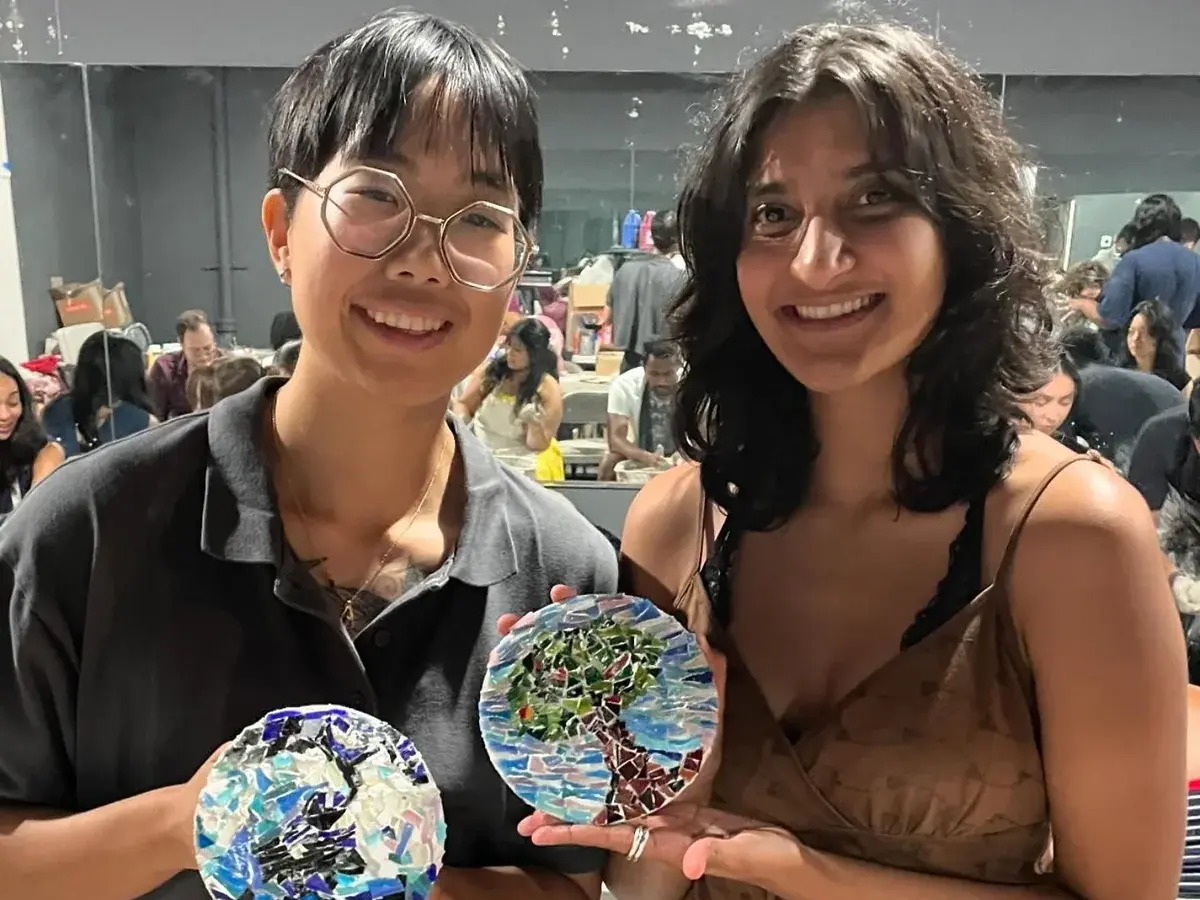
A mosaic is built one small decision at a time. Whether the pieces are glass, ceramic, or stone, the artwork emerges from how they are arranged, spaced, and grouped rather than from a single perfect drawing.
For first-time makers, starting with a limited palette and a clear focal point gives a better result than attempting a complicated picture with every tile in the box.
Learn It in the Studio
Make Something Yourself at Color Cocktail Factory
Explore beginner mosaic class, select your studio or online session, and review current ticket and finishing terms before booking.
Explore Beginner Mosaic Class →Understand the layers of a mosaic
A typical mosaic project starts with a stable base, adds a planned arrangement of pieces, secures them using an appropriate adhesive, and may be finished with grout. Not every mosaic uses grout, and the right materials depend on whether the finished artwork will be indoors, outdoors, or near moisture.
Small projects such as decorative plaques are ideal for learning because they keep the cutting, spacing, and finishing manageable. For a first design, a few larger pieces surrounded by smaller ones are often easier to control.
Plan the image before gluing
Begin by outlining a simple shape: a sun, flower, landscape horizon, or geometric border. Set the tiles on the base without adhesive and step back. Your eye should notice the main subject first, not an accidental cluster of bright pieces in one corner.
Choose a palette of two dominant colors plus a neutral. Contrasting colors can define the edges of an image, while similar colors create subtle transitions. Leave consistent gaps when the chosen finishing method requires them.
- Dry-fit the pieces before adding adhesive.
- Build from the focal area outward or establish a border first.
- Wear eye protection when cutting tile and follow instructor guidance.
- Keep small fragments and sharp edges away from children.
Cutting, attaching, and finishing
Tile nippers allow you to shape compatible pieces into curves and points, but controlled pressure and appropriate protective equipment matter. Some glass products and backing materials require different tools; never treat every tile as interchangeable.
Use the adhesive and grout recommended for the base and setting. Allow the necessary cure time, then finish the surface as directed. Do not rush the final cleaning, which is often what makes colors and lines read clearly.
What to expect at a studio workshop
An instructor can help you choose a manageable image, demonstrate safe tool use, and adapt the design when a tile breaks differently than expected. Beginners do not need a drawing portfolio or previous craft experience.
At Color Cocktail Factory, the Mosaic Creations activity page provides the current Chicago workshop description, available dates, and booking details. Check those details before assuming a specific finished-piece size or whether a curing step means same-day pickup.
Frequently Asked Questions
Is mosaic art hard for beginners?
Simple mosaics are approachable, especially when the design uses a limited palette and broad shapes.
Do mosaics always need grout?
No. Some designs and materials use other finishing methods; follow the instructions for your project.
Can I cut glass tiles without instruction?
Use appropriate tools, protective equipment, and instructor supervision, particularly with glass or sharp edges.
Ready to Try It Yourself?
Visit the Beginner Mosaic Class activity page to select an available session and review what is included in the current class.
Explore Beginner Mosaic Class →