Colonoware and the American Pottery Story We Inherit
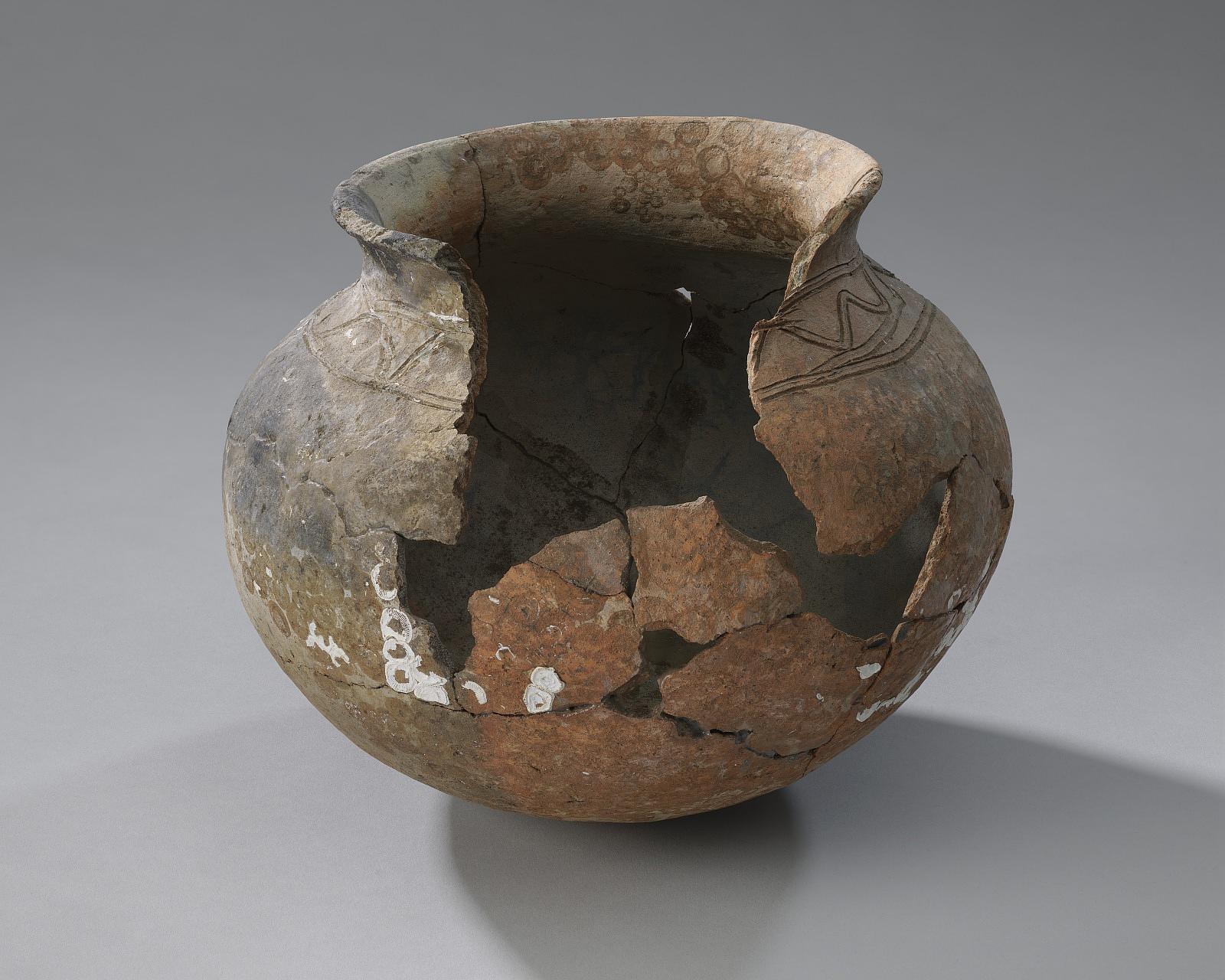
The pot below is missing a large piece of its body. Its maker’s name is missing, too.
Look at what remains: a rounded belly, a neck that draws inward, lines cut into the clay around the shoulder. Someone made those decisions. Someone knew how to persuade wet earth to hold this shape.
The Smithsonian dates this colonoware pot to the eighteenth century and lists its maker as unidentified. We can study the person’s work in remarkable detail while knowing almost nothing about the person. Museum record
That is a good place to begin a different conversation about American pottery.
What is colonoware?
Colonoware is an archaeological term for certain locally made, low-fired earthenware vessels found at colonial-era and later sites. Think bowls and jars shaped by hand, usually without glaze. Their surfaces might be smoothed, polished by burnishing, or marked with decoration.
In South Carolina, these wares are attributed to African and Indigenous potters, both free and enslaved. Their forms and techniques vary by place and community. “Colonoware” names a category of pottery; it does not give every vessel the same cultural identity. South Carolina State Parks
That distinction matters. A pot can carry knowledge from more than one tradition, but its appearance alone cannot tell us its maker’s ancestry—or whether that person was free.
Try keeping a clay wall even
If you have ever pinched a bowl until one side collapsed, you already have a useful way into this history.
You know how much judgment a small vessel takes. Press here and the wall thins. Add height too quickly and the form sags. The rim has to work with the body. The clay has to dry and survive firing. A quiet-looking pot can contain a great deal of experience.
Keep that in mind when you encounter the word “utilitarian.” A pot made for daily use still deserves a close look at its proportions, surface, and construction. Usefulness gives us more to examine.
Finding a pot is only the beginning
At Mount Vernon, archaeologists have recovered colonoware without finding evidence that it was made on the estate. They suggest the vessels arrived through regional trade or exchange. Their forms draw on Indigenous, African, and English examples. George Washington’s Mount Vernon
That complicates the easy story: a pot found on a plantation was not necessarily made there. To understand it, we have to ask who made it, who moved it, and who used it.
We also have to keep the conditions of that work in view. Cultural exchange in a society shaped by colonization and enslavement did not happen on equal terms. Admiring a maker’s ingenuity should bring us closer to that history, including its violence.
A name scratched into the clay
Now look at the second vessel. On its shoulder, you can read a name: Dave.
David Drake signed and dated this storage jar August 9, 1852. It belongs to the Edgefield stoneware tradition, which is distinct from colonoware. Here, the maker’s name survives on the object itself. Smithsonian museum record
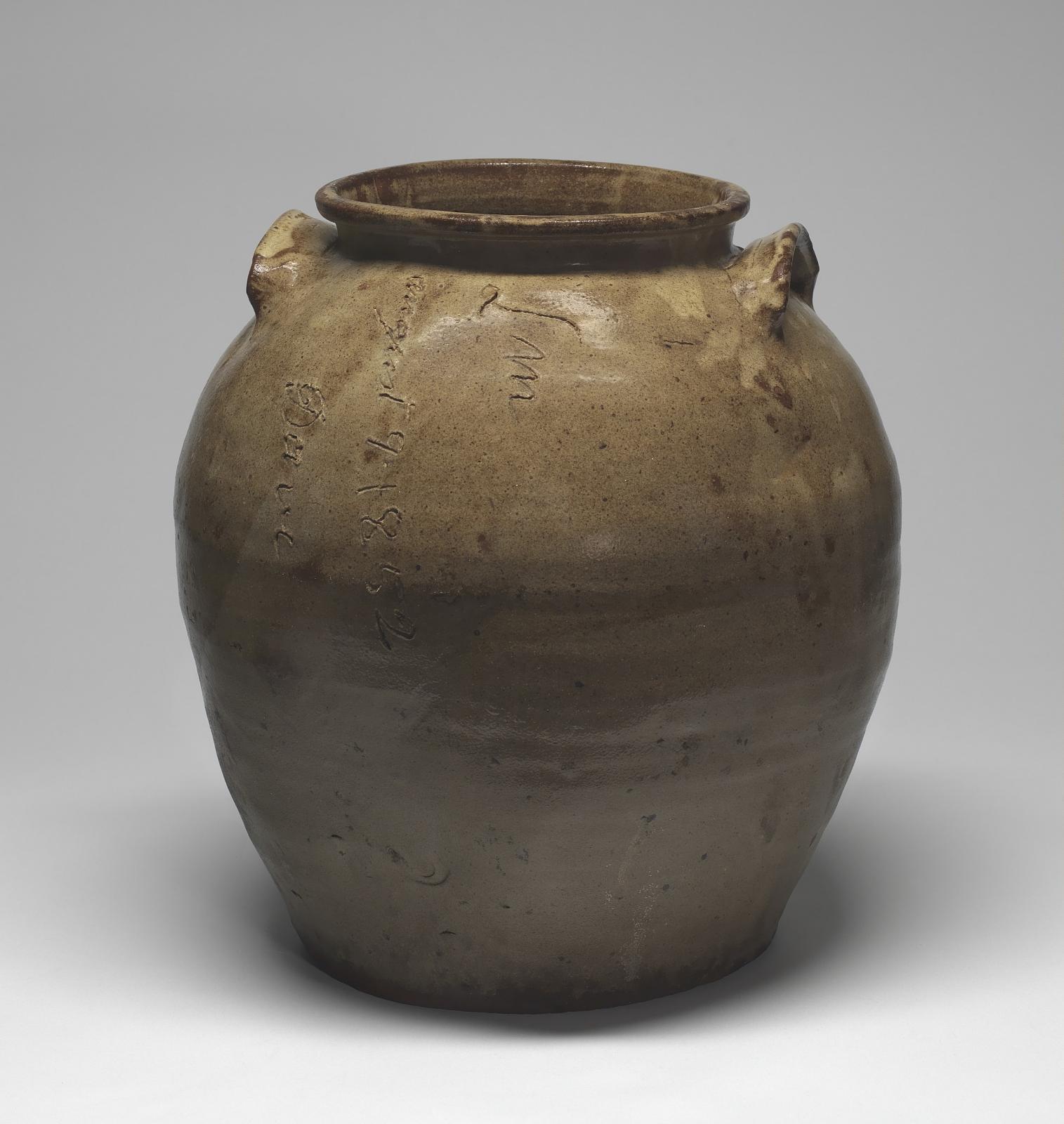
Drake made pottery while enslaved. The exhibition Hear Me Now: The Black Potters of Old Edgefield, South Carolina placed his work and that of other historical Black potters in conversation with contemporary artistic responses. That pairing makes a powerful proposition: these makers belong in the discussion of what ceramics means now. The Metropolitan Museum of Art
Seeing the two pots together also raises a question worth sitting with: how much does knowing a name change the attention we give a piece?
What we bring back to the studio
Today’s American pottery has many histories. Colonoware is one of them; it is not the ancestor of every contemporary cup or bowl. Its importance reaches beyond a direct line of technique.
It changes what we pay attention to. In a class, that might mean naming the communities behind a technique we discuss. In a museum, it might mean spending longer with an unsigned cooking vessel. In our own work, it might mean asking where an admired form comes from before calling it our invention.
There is still room for the pleasure of making a bowl that feels good in your hands. Knowing this history gives that pleasure more depth.
The next time you turn a handmade pot over to look for a signature, think about the first vessel on this page. Someone made it. We can give the work our attention even when we cannot give its maker a name.